
Organic Growth vs Paid Ads, What Should Ministries Focus On First
Many ministries face the challenge of choosing between organic growth and paid ads, especially with limited budgets and the need for mission-aligned engagement. Organic growth nurtures community, trust, and discipleship through consistent content, meaningful interactions, and storytelling. Paid ads can quickly amplify reach for events, campaigns, or seasonal outreach. Understanding which to prioritize first ensures your ministry’s efforts are effective and faithful. This guide will help you create a strategy that balances long-term community building with intentional promotion.
Choosing Between Organic and Paid Reach
1. Understanding Organic Growth
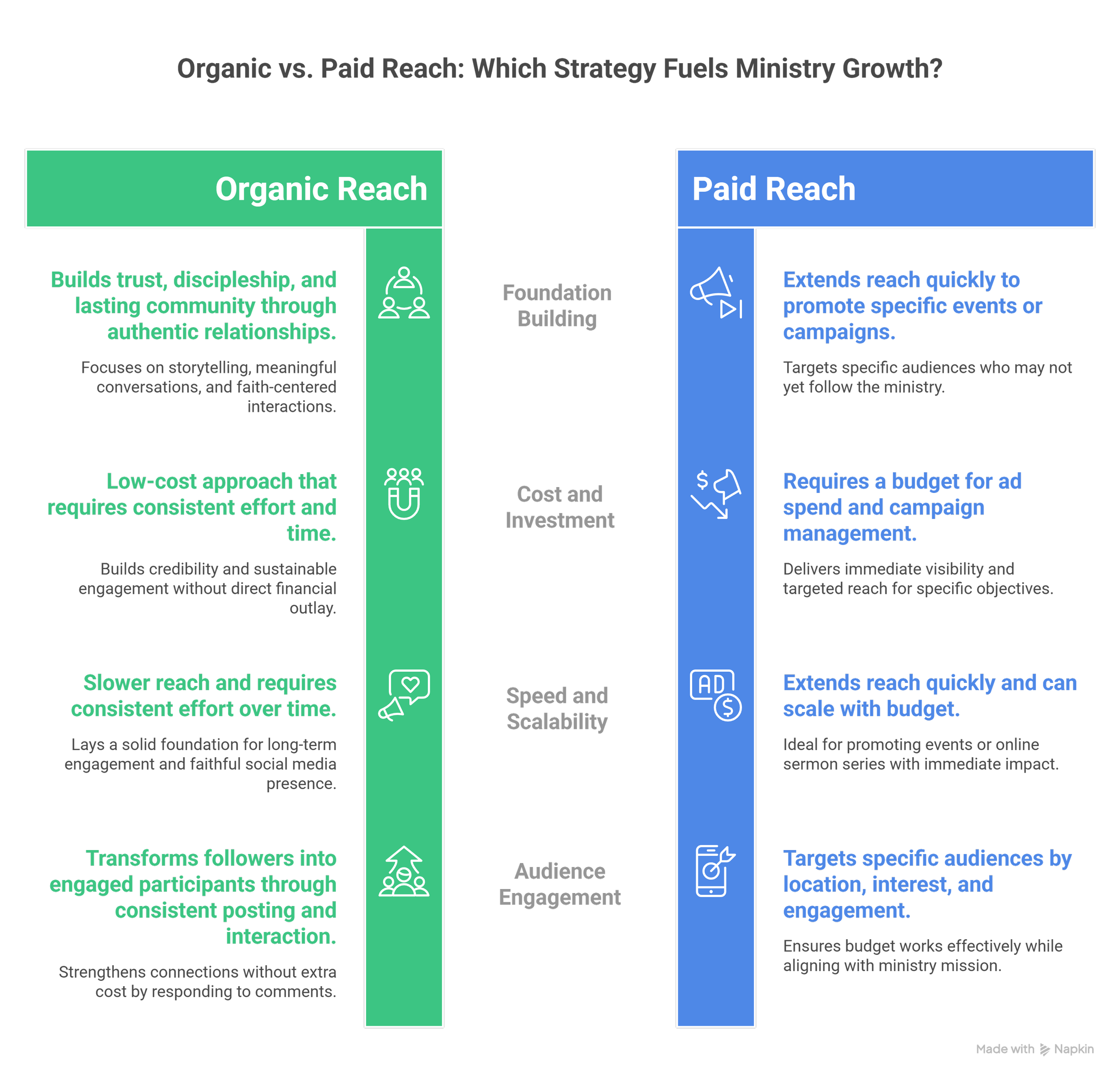
Organic growth means growing your ministry’s audience naturally through content, engagement, and authentic relationships. For ministries, it builds trust, discipleship, and lasting community. Consistent posting, sharing devotionals or testimonies, and responding to comments transforms followers into engaged participants. Focus on storytelling, meaningful conversations, and faith-centered interactions to strengthen connections without extra cost. This approach lays a solid foundation for long-term engagement and faithful social media presence.
2. The Role of Paid Ads
Paid ads extend reach quickly, promoting events, campaigns, or seasonal outreach. They complement organic efforts by targeting specific audiences who may not yet follow your ministry. Start small, define clear objectives, and monitor ROI before scaling. Platforms like Instagram and Facebook allow targeting by location, interest, and engagement, ensuring your budget works effectively while aligning with your ministry’s mission.
3. Pros and Cons of Organic Growth
Organic growth builds credibility, sustainable engagement, and low-cost discipleship. Challenges include slower reach and the need for consistent effort. Posting devotionals, volunteer stories, or prayer highlights strengthens community over time. This approach fosters trust and authentic connections that paid ads alone cannot create, making it essential for mission-driven ministries.
4. Pros and Cons of Paid Ads
Paid campaigns deliver immediate visibility and targeted reach, ideal for promoting events or online sermon series. However, they require a budget and may underperform if messages are not mission-aligned. Use them strategically, such as boosting a high-engagement devotional post or a special outreach event, to supplement, not replace organic ministry efforts.
5. How to Decide Your Focus
Decide between organic and paid based on audience size, mission priorities, team capacity, and budget. Prioritize organic first for credibility and community, then use paid ads to amplify messages strategically. Audit engagement, define objectives, and test small campaigns to ensure every dollar and effort serves ministry impact.
6. Integrating Both Approaches
Blend consistent organic content with selective paid amplification. Promote posts that resonate to reach more hearts and strengthen engagement. Schedule content, monitor analytics, and adjust campaigns to maintain balance between reach, community, and mission alignment.
7. Common Mistakes to Avoid
Avoid over-reliance on paid ads, neglecting community engagement, chasing trends over mission, and ignoring analytics. Track metrics like shares, saves, and comments, prioritize content aligned with your ministry’s values, and maintain consistency to ensure faithful and effective social media growth.
Amplify with Intention

Ministries grow strongest when they focus on organic growth first, fostering trust, engagement, and authentic community. Paid ads become effective when used intentionally to amplify high-value, mission-aligned content. Consistent planning, clear objectives, and faith-driven strategy ensure every effort serves discipleship and outreach. By blending organic efforts with strategic promotion, churches can expand their reach, strengthen relationships, and maximize Kingdom impact online, turning each post into a ministry opportunity.
Key Takeaways
Prioritize organic growth first to build trust, engagement, and discipleship.
Use paid ads strategically to amplify mission-aligned content.
Consistent storytelling and authentic interactions strengthen community.
Audit engagement and define objectives before investing in promotion.
Blend organic content with selective paid campaigns for maximum impact.
Track metrics, stay mission-focused, and avoid chasing trends for faithful growth.
At Faithful Reach, we help ministries grow faithfully online by crafting mission-focused strategies, fostering community engagement, and sharing Christ-centered messages. With intentional, consistent effort, your digital presence can reach more hearts and multiply Kingdom impact.
